A timely funding opportunity from the Extension Disaster Education Network (EDEN) helped a Texas A&M program play a vital role in mapping efforts following the 2025 flooding in Kerrville, Texas.
Over the past year and a half, the Community Hazards and Resource Management (CHARM) Planning Team has worked closely with Disaster Assessment and Recovery (DAR) specialists to better understand what tools and resources could strengthen their work in the field and with local communities.
Texas A&M AgriLife Extension Service’s DAR unit houses programs such as CHARM that provide education and disaster mitigation resources across the state. The CHARM Planning Team develops hands-on table-top mapping exercises to guide communities through scenarios for future land use, hazard assessments, and local priorities.
In March 2024, DAR Specialist Daniel Hale reached out to the Planning Team’s GIS analysts seeking United States National Grid (USNG) maps for Milam County and surrounding areas. When the team couldn’t locate existing maps, they worked with Hale to identify his specific mapping needs and priorities.
At the time, the team didn’t have dedicated funding to produce maps for Hale’s entire district. DAR provided a small amount to create an initial pilot set, and later that year, Hale and DAR Chief Jeff Fant identified a grant opportunity through EDEN that perfectly aligned with the project. Together, Hale and the Planning Team applied for and received funding to develop USNG maps for all of Texas.
USNG references convey precise location information in a short sequence of characters that is easily relayed in writing or by voice, which makes them preferable for ground operations and local or rural applications. This improves confidence and saves time identifying and coordinating locations with other responding agents in the field.
Midway through the project in July, Hale called to ask if the team had completed the USNG maps for Kerr County. Severe flooding in Kerrville left responders without adequate maps for ongoing ground search and rescue operations.
The CHARM Planning Team’s GIS analysts immediately stepped in. They conducted a quick Quality Assurance and Quality Control (QA/QC) review to ensure the maps were aligned and easy to read for the recovery team. Within 30 minutes of Hale’s call, he had the complete set of Kerr County maps in hand.
According to CHARM GIS Analyst Erika Pham, the team had begun developing printable, deployable USNG maps for Texas counties earlier that spring, thanks to EDEN’s funding. “That early support made all the difference,” she said. “By the time the Kerr County flooding occurred, we had already developed maps for about 75% of Texas. We’re grateful to EDEN for making it possible to provide our DAR specialists with usable, deployment-ready maps before disasters even happen.”
https://extensiondisaster.net/wp-content/uploads/2026/03/eden-logo-for-web-2.png00ellenkrugel@extension.orghttps://extensiondisaster.net/wp-content/uploads/2026/03/eden-logo-for-web-2.pngellenkrugel@extension.org2025-11-14 12:04:212025-11-14 12:04:21EDEN Funding Strengthens Mapping Resources for Kerr County Flood Response
by Jordan Baze, Texas A&M AgriLife Extension Service Disaster Assessment & Recovery Unit
Catastrophic floods occurred on July 4th, 2025, impacting multiple counties in the Texas Hill Country and parts of West Texas. As the Guadalupe River swelled to historic levels during the early hours Independence Day, sadly, these flood events caused multiple fatalities with over a hundred lives lost. Hardest hit were youth camps and those that were camping along the river.
Extension’s role during the disaster was multi-faceted, involving the Disaster Assessment and Recovery Unit as well as numerous County Extension Agents and staff members in affected counties. From the start of the event, the Texas A&M AgriLife Extension Service answered the call for assistance by taking on various response roles:
Staffing the State Emergency Operations Center
Deploying to Incident Management Teams
Conducting damage assessments
Deploying staging area manager teams and providing logistical support for the Texas A&M University Veterinary Emergency Team
Extension provided response resources deploying personnel from the DAR Mitigation Branch to assist with mapping efforts for damage assessment teams.
As the disaster phased into recovery, AgriLife Extension deployed personnel to provide educational resources at eleven Disaster Recovery Centers, reaching over 690 individuals directly affected by flooding. DAR provided educational resources such as insurance options, livestock indemnity, mold remediation, and food safety handling. Other online resources were provided via texashelp.tamu.edu. QR code printed resources were also provided making information readily available for flood victims with smartphone access.
Extension also partnered with several local nonprofit agencies and volunteer groups to procure and deliver fencing materials to ranchers who were forced to rebuild due to lost fencing during the floods. Other agricultural losses resulting from the flooding included livestock—sheep, goats, and cattle—as well as hay and cotton acreage. Barns and other infrastructure were part of loss assessments. Preliminary estimates totaled more than 500 miles of fence sustained damage across nine counties affected by the flood.
DAR Specialists were also deployed to provide logistical resources for the First Responder Peer Support efforts conducted by the Texas Division of Emergency Management.
Disaster Assessment and Recovery Specialists worked closely with county extension agents to ensure the needs of landowners and families were met.
These efforts continued into October as recovery efforts are ongoing for Hill Country Texans.
https://extensiondisaster.net/wp-content/uploads/2026/03/eden-logo-for-web-2.png00ellenkrugel@extension.orghttps://extensiondisaster.net/wp-content/uploads/2026/03/eden-logo-for-web-2.pngellenkrugel@extension.org2025-10-16 10:51:182025-10-16 10:51:18Catastrophic Floods and Extension’s Call to Action
BATON ROUGE, La. — When disaster strikes, access to reliable information and communication can be just as essential as food and water. The Southern University Agricultural Research and Extension Center (SU Ag Center) is meeting that need through its Mobile Technology Education Center (M-Tech Unit), a mobile classroom that delivers educational programs and disaster recovery support across Louisiana.
Launched with federal recovery funds after Hurricanes Gustav and Ike, the M-Tech Unit was created to help small agricultural businesses rebuild. “After those storms, many of our clientele along the coast lost everything, including their businesses, equipment, and customer base,” said William Augustine, M.Ed., Project Coordinator ECP/ MTEC Technician at Southern University Ag Center. “We developed four certification programs—Food and Farm Safety, Small Business Development, Sustainable Urban Agriculture, and Master Small Ruminant Production—to help them get back on their feet.”
The mobile classroom is equipped with internet access, computers, and printers, making it a traveling hub for education and outreach. Although not originally built for disaster response, its capabilities have made it a vital tool in crisis situations.
“When hurricanes or tornadoes hit and power and communications go down, we can roll in and provide internet access so people can contact insurance companies, apply for SNAP benefits, or complete FEMA paperwork,” Augustine said. “Even if the community has lost power, we can establish a connection and help them communicate with local or federal government.”
After Hurricane Laura, the unit deployed to Bastrop, Louisiana, where residents had been cut off from essential services. “We set up internet, computers, and printers inside and outside the unit so more people could apply for assistance,” Augustine said. “We also distributed water and COVID supplies. People were so relieved to finally move forward.”
When not supporting disaster response, the M-Tech Unit fulfills its core mission of providing statewide certification training. Augustine said this dual role—education during normal times and response during disasters—makes the unit uniquely valuable. “It’s not just what we teach,” he said. “It’s how we show up for people when they need us most.”
While the M-Tech Unit operates within Southern University’s Extension programs, its work connects closely with national efforts to strengthen disaster preparedness and community resilience. The Extension Disaster Education Network (EDEN), a collaboration of land-grant universities that share research-based resources before, during, and after disasters, highlights programs like Southern’s to demonstrate how Extension supports recovery. Augustine hopes sharing the M-Tech model will inspire similar outreach in other states.
“We do a lot of extension work that may not be widely known,” he said. “EDEN could be a great platform to help more people learn about what we offer, and help other states consider similar models.”
With its innovative design and boots-on-the-ground approach, the M-Tech Unit stands as a model of how land-grant institutions can combine education and disaster resilience to meet community needs. As Augustine puts it: “Wherever we can help, we go.”
https://extensiondisaster.net/wp-content/uploads/2026/03/eden-logo-for-web-2.png00ellenkrugel@extension.orghttps://extensiondisaster.net/wp-content/uploads/2026/03/eden-logo-for-web-2.pngellenkrugel@extension.org2025-10-14 00:40:072025-10-14 00:40:07Southern University’s M-Tech Unit Brings Critical Education and Recovery Support to Louisiana Communities
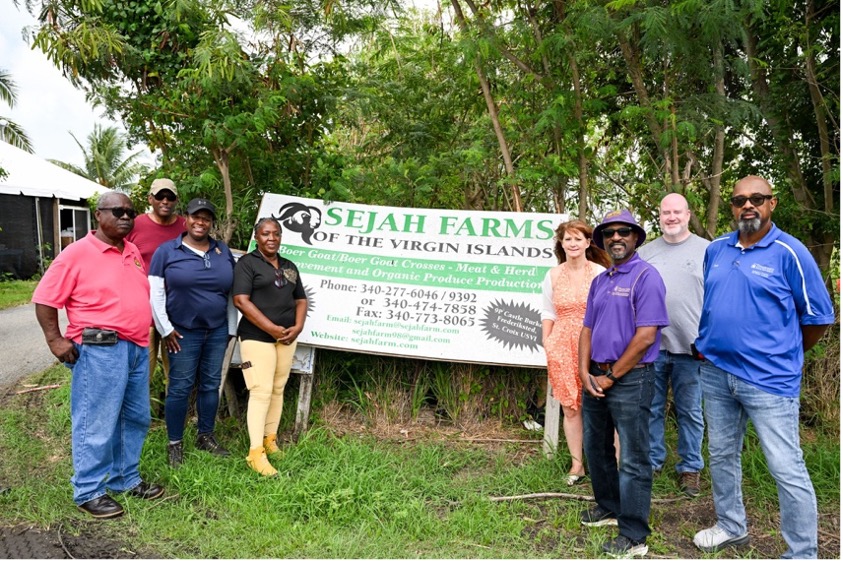
Members of the 1890-Extension Disaster Education Network (EDEN) Advisory Group (AG) during a farm visit in St. Thomas, U.S. Virgin Islands.
The 1890-Extension Disaster Education Network (EDEN) Advisory Group (AG) traveled to St. Croix and St. Thomas, U.S. Virgin Islands July 20-24, 2025, on a fact-finding trip with the goal of expanding research and Cooperative Extension programming opportunities on disaster management and grassroots resilience in the U.S. territories in the Caribbean.
During the trip the team conducted focus groups with local farmers and fisherman, Cooperative Extension professionals and representatives from government agencies and non-governmental organizations (NGO’s). The Southern Sustainable Agriculture Research and Education (SARE) Program provided funding for the trip.
The research and extension team included, Noel M. Estwick, Ph.D., assistant professor of agribusiness at Prairie View A&M State University, Michelle Eley, Ph.D., community and economic development specialist at North Carolina A&T State University, Christina Sanders, director of community and economic development for Washington State University Extension, Finis Stribling III, director of the Tennessee New Farmer Academy and Small Farms Program at Tennessee State University, ChaNae Bradley, senior communications specialist for Fort Valley State University’s Cooperative Extension, Patrick Holladay, Ph.D., executive lead for the Richardson Family Smart State Center for Economic Excellence in Tourism and Development Institute for Clean Water and Healthy Ecosystems at the University of South Carolina and Brennan Washington, outreach coordinator for SARE.
Estwick, chair of the 1890-EDEN AG, said the purpose of the trip was to conduct strategic conversations about disaster-related challenges facing the U.S. territories in the Caribbean.
Fins Stribling III shares information with farmers on the campus of UVI St. Croix.
“The team had extremely productive conversations with government officials, academia, farmers, fishers, NGOs representatives and other stakeholders. The AG gained a clearer understanding about challenges facing the U.S. Virgin Islands with regards to agricultural disasters. We successfully identified potential partnerships to specifically address how we (the AG, the Virgin Islands Department of Agriculture, the University of the Virgin Islands (UVI) and other USVI partners) can share resources, conduct relevant training, conduct research and develop programming that meaningfully addresses disaster related challenges,” Estwick said.
During the trip, the team visited the UVI St. Croix and St. Thomas campuses. The team was welcomed by Usman Adamu, Ph.D., dean of the UVI College of Agriculture, and Louis E. Petersen, Ph.D., commissioner of the Virgin Islands Department of Agriculture.
Also, the AG met with farmers on site as well as traveled to small farms on the islands including Sejah Farms and cattle farmer Frank Bermudez in St. Croix. In addition, the team traveled to St. Thomas and visited Shelly Brins Farm, Anna Wallace Farm and We Grow Food Inc. Likewise, the AG had a chance to visit agriculture research and Extension facilities and farms on the UVI campuses.
“The highlight was visiting the farms – seeing firsthand the work that they are accomplishing, better understanding the crops they produce, and seeing the impacts of the storms they have managed to endure. I think that as a group we learned a lot about the challenges that each of those islands face on an ongoing basis – which will very much inform how best to move forward in planning future trips, relevant trainings and how best to help them navigate opportunities for acquiring funding,” Sanders said.
In addition to visiting the farms, the AG listened to the concerns of the elected officials as well as the local fisherman and producers.
“Seeing firsthand the resiliency of the residents as well as the passion to preserve cultural traditions and agricultural practices was a memorable part of the conversations. I believe that the visit was a step towards obtaining knowledge to be able to take advantage of the resources available by SARE and other grant funding agencies who advocate for disaster preparedness and mitigation,” Bradley said.
The 1890 EDEN AG visits Sejah Farms in St. Croix. They are accompanied by UVI Extension colleagues and Brennan Washington (far left) outreach coordinator for SARE.
Risse Richards, deputy commissioner for the U.S. Virgin Islands Department of Agriculture, shared her concerns. “We need grant writers, and we need professionals to help us manage data,” Richards said. She said this will help farmers improve record keeping practices, agribusiness and improve infrastructure like reconstructing local roads.
St. Thomas farmer Laura Martin expressed a need for improved communication before disasters. “We need a coordinated system that reaches everyone,” Martin said.
After the visit to the Virgin Islands, Estwick identified potential next steps with the Virgin Islands Department of Agriculture and the UVI Extension.
“The potential to work with the government through the Commissioner of Agriculture, academia and community stakeholders to create a mechanism where producers can share information about disaster experiences is evident. The goal is to foster resilience in the face of agricultural disasters. There is also the prospect for our colleague Finis Stribling III and the AG to work with partners in the VI to create a farm academy structure for the U.S Caribbean territories,” Estwick said.
The aim of the 1890-EDEN AG is to work with USDA-NIFA, the Extension Foundation and EDEN on strategies developed in the AG action plan to build emergency management capacity in the 1890 community and beyond. An associated goal is to identify and form strategic collaborations to achieve the action plan goals and deliver programs, information and resources tailored for limited resource clientele. Accordingly, this trip was a follow-up to work carried out in funded SARE project LS2-0343, in preparation for plans to secure future funding to expand the disaster work of the AG into the United States territories in the Caribbean.
For more information about this project, contact Noel M. Estwick, Ph.D. at nmestwick@pvamu.edu
https://extensiondisaster.net/wp-content/uploads/2026/03/eden-logo-for-web-2.png00ellenkrugel@extension.orghttps://extensiondisaster.net/wp-content/uploads/2026/03/eden-logo-for-web-2.pngellenkrugel@extension.org2025-09-16 15:56:432025-09-16 15:56:431890 EDEN Advisory Group conducts focus groups with farmers in the U.S. Virgin Islands
KANSAS CITY, Mo – The Extension Disaster Education Network (EDEN) Community and Economic Development (CED) Committee has released a new series of fact sheets and a quick-reference guide to help Extension and disaster professionals engage faith communities more effectively before, during, and after disasters.
“Communication is key when preparing for and responding to disasters, and it is imperative during the recovery phases,” said Russell Medley, EDEN CED Committee Chair. “To be able to effectively work with Faith Communities during these times increases the probability that recovery can happen quickly. These resources will help Extension and Disaster Professionals understand how to collaborate with individual Faith Communities, provide culturally and religiously appropriate assistance, and galvanize these communities into becoming partners in disaster relief across the US.”
The new resources are part of a long-running commitment by EDEN and its 1890 Advisory Group to integrate religious and cultural literacy into disaster preparedness and response. The initiative began with FEMA-supported training for Advisory Group members and expanded through key events including a 2021 EDEN post-conference session, a national 2-day workshop in 2022, and a FEMA Train-the-Trainer certification completed by 1890 institutions in 2024.
“As part of the whole community approach to emergency management, cultural competency is critical to efforts to reasonably ensure that disaster relief efforts provide adequate resources to all segments of the community,” said Noel M. Estwick, EDEN 1890 Advisory Group chair. “Our training places emphasis on cultural literacy because we believe it is vital to adequately engage communities. We believe that cultural literacy is often the missing link in how governments and some other entities engage with communities.”
These materials will help Extension professionals strengthen disaster response by building trusted relationships with faith communities. Access the fact sheets and quick-reference guide now on the EDEN Resource Dashboard.
###
https://extensiondisaster.net/wp-content/uploads/2026/03/eden-logo-for-web-2.png00ellenkrugel@extension.orghttps://extensiondisaster.net/wp-content/uploads/2026/03/eden-logo-for-web-2.pngellenkrugel@extension.org2025-09-08 12:17:312025-09-08 12:17:31New Resources Help Extension and Disaster Professionals Engage Faith Communities in Times of Crisis
AUGUST 20, 2025–Residents of the Northeast often have extreme weather on their minds. As these events grow more common, experts are calling for the active hurricane season to continue in the coming months.
Although it is impossible to plan and prepare for every potential situation, there are steps that help residents, businesses, and communities increase their resilience before, during, and after they shelter from a storm.
While state and federal agencies manage community-wide disaster response in Connecticut, UConn Extension offers resources, including those that are specific to coastal communities.
Make it a family affair. “Involve your entire household, including children, in getting ready beforehand, and sign up for emergency alerts,” Mary Ellen Welch, an extension educator based in the New London County Extension Center says. Parents can empower children to be knowledgeable, safe and confident.” View the UConn Extension fact sheet on preparing children for severe weather.
Make a family communication plan, discuss why it is important to be ready when severe weather is coming, and what to do (and not to do) if it strikes quickly, or you become separated.
Choose one person as a central contact and practice how to connect with each other.
Make seasonal go-bags specifically for each person and pet with nonperishable food/water, clothing, essential toiletries, medicines and keep medical financial, and other important records accessible in two locations such as the cloud, your mobile phone, or on paper.
UConn Extension has other resources that can help communities and businesses be prepared. UConn’s EDEN website has resources available, including some on how to shelter from the storm for people who are housing insecure. EDEN resources include fact sheets, videos, and guides that can help each sector prepare for and mitigate their risk level. Basic guidelines that all target audiences should consider include:
Power outages are likely in various types of storms and are one of the first things you should prepare for. Preparation can make an outage more manageable.
Create a property inventory in case of evacuation and loss. Inventories are used for insurance claim purposes.
Make sure you are financially prepared too. A fact sheet has tips that will help people in every economic demographic.
Communities face flooding during storms, and a fact sheet has tips for all audiences to reduce the risk and level of flooding they face.
“Through the EDEN network, when disaster does strike in one part of the nation, our Extension colleagues in the impacted area can go to our resource dashboard for information and reach out with questions,” says Faye Griffiths-Smith, an associate extension educator in the New Haven County Extension Center, and a member of EDEN’s national Executive Committee. “Members of the EDEN respond quickly with information and support. Often, a colleague in another state has experienced a similar situation. They can share their expertise and helpful resources on the topic.”
Keeping Shorelines Safe
Coastal communities face different challenges than inland communities, and Connecticut Sea Grant and UConn Extension professionals designed programs and resources specifically tailored to these areas. Programs focus on steps to resilience and climate change planning.
“My colleagues and I are working on resilience to empower decision-makers with science-based knowledge to help them anticipate and overcome disturbances caused by a changing climate,” says Deb Visco Abibou, an assistant extension educator with Connecticut Sea Grant and UConn Extension. “We prioritize building relationships with our communities so that we can be responsive to their specific needs.”
“This and other programming allow us to meet communities where they are and provide support along the way as they move from assessments to planning to project implementation,” says Abibou.
People facing housing insecurity can also prepare to shelter from the storm, whether it’s extreme heat, cold, wind, or flooding. An infographic series offers tips, which can be used in other scenarios too. First, it is important to know the signs of an extreme situation, and second, take action to prepare for or mitigate its impact. This is where sheltering from the storm comes in and identifying those locations ahead of time is crucial in the planning process.
We may not have a crystal ball to determine what storms are brewing, but we can improve our planning, preparation, and recovery with resources from UConn Extension.
https://extensiondisaster.net/wp-content/uploads/2026/03/eden-logo-for-web-2.png00ellenkrugel@extension.orghttps://extensiondisaster.net/wp-content/uploads/2026/03/eden-logo-for-web-2.pngellenkrugel@extension.org2025-08-20 19:22:302025-08-20 19:22:30UConn Extension Helps Connecticut Prepare to Shelter from the Storm
KANSAS CITY, Mo. — July 31, 2025 — The Extension Disaster Education Network (EDEN) invites applications for the 2025-2026 EDEN Development Grants, a program designed to bolster innovative projects that strengthen disaster preparedness, response, and recovery across the United States.
The grant offers awards of up to $25,000 per project and is designed to support land-grant and sea-grant university Extension professionals dedicated to advancing disaster education. To be eligible, applicants must be employed by an EDEN-member institution with at least one team member serving as an EDEN delegate or Point of Contact.
“Our EDEN Development Grants are at the heart of our mission to empower communities in disaster education,” said Angie B. Lindsey, EDEN Chair. “These grants foster innovation, collaboration, and the development of actionable resources to equip individuals and organizations for hazards and disasters.”
Applications open on July 31, 2025, and must be submitted by Noon Pacific Time on Monday, September 29, 2025. Award recipients will be notified in October 2025, with projects funded from October 1, 2025 through August 31, 2026.
Proposals should align with one of four core focus areas: 1) the development of publicly accessible EDEN resources and scholarship; 2) professional development for EDEN Points of Contact and Delegates; 3) enhancement of membership and participation within the network, 4) expansion of partnerships and relationships to strengthen EDEN’s impact, including funding collaborations with organizations such as the USDA. Applications should clearly detail the project’s intended outcomes, deliverables, and tangible contributions to EDEN.
EDEN is a collaborative network of Cooperative Extension educators across the United States and its territories, working to improve the delivery of education and information, as well as the availability of resources related to disaster preparedness, response, and recovery. This grassroots network is aligned with the Extension Committee on Organization and Policy (ECOP) and supported by the USDA National Institute of Food and Agriculture through the Food and Agricultural Defense Initiative (FADI) grant.
The Extension Foundation, in partnership with Washington State University and the Cooperative Extension System, supports the administration of the FADI-EDEN project. Learn more about EDEN here.
https://extensiondisaster.net/wp-content/uploads/2026/03/eden-logo-for-web-2.png00ellenkrugel@extension.orghttps://extensiondisaster.net/wp-content/uploads/2026/03/eden-logo-for-web-2.pngellenkrugel@extension.org2025-07-31 14:50:442025-07-31 14:50:44Extension Disaster Education Network Opens Applications for 2024-2025 Development Grants
By ChaNae` Bradley, Senior Communications Specialist, MPA, Fort Valley State University
Finis Stribling III serves as director of the Tennessee New Farmer Academy and Small Farms Program at Tennessee State University (TSU). In addition, Stribling has served on the 1890 Extension Disaster Education Network (EDEN) Advisory Group (AG) for eight years. Through this question-and-answer session, Stribling will share how SARE grant funds will be used to help farmers increase their resilience in the face of a natural disaster.
Finis Stribling III, director of the New Farmer Academy and Small Farm Program at Tennessee State University (TSU), serves as co-chair of the 1890 Extension Disaster Education Network (EDEN) Advisory Group (AG).
Tell me about the recent proposal you submitted?
I recently received funding from the Sustainable Agriculture Research Education (SARE) Program to conduct the second 1890 Farmer Boot Camp, a disaster preparedness and risk management workshop designed for socially disadvantaged, limited resource and underserved farmers. The program aims to equip farmers with the tools and strategies needed to enhance their resilience to natural disasters and economic disruptions. Its primary objectives are to build capacity in disaster planning, farm financial risk management, estate planning and accessing emergency resources.
I have not yet scheduled a date for the workshop this fall, but I am currently in the planning phase and intend to finalize the date soon.
Why is this type of work important?
There is a significant need for this type of training, particularly among small-scale, limited- resource, and underserved farmers who often lack access to disaster preparedness education. These farmers frequently face greater challenges in recovering from natural disasters due to limited financial and technical support, as well as a lack of knowledge about available disaster assistance resources.
Who will benefit from this training?
The primary beneficiaries of this training will be socially disadvantaged farmers across Tennessee, particularly those in rural and historically underserved communities. Participants will gain vital knowledge and practical skills to manage risks and safeguard their farming operations.
Share some of the topics of discussion for the workshop?
Workshop topics will include disaster preparedness planning, financial risk management, U.S. Department of Agriculture (USDA) disaster programs, farm safety, estate planning and available disaster recovery resources.
How did you become involved in this type of work?
I became involved in this work through my extensive experience as an Extension educator. This role has included a range of responsibilities throughout my career. Through years of working closely with small and underserved farmers, I came to understand the urgent need for focused disaster preparedness training to help strengthen their resilience and long-term sustainability. I currently serve as the EDEN point of contact for TSU and as co-chair of the 1890 EDEN AG.
Describe the role of TSU in this project?
TSU’s Extension Program will play a key role in planning, organizing and delivering the workshop series. The program will leverage its strong networks with local farmers, USDA agencies and community partners. Additionally, Extension agents will provide ongoing technical assistance, facilitate follow-up educational workshops and connect participants with local, state and federal resources.
https://extensiondisaster.net/wp-content/uploads/2026/03/eden-logo-for-web-2.png00ellenkrugel@extension.orghttps://extensiondisaster.net/wp-content/uploads/2026/03/eden-logo-for-web-2.pngellenkrugel@extension.org2025-07-16 11:21:482025-07-16 11:21:48Boot camp aims to enhance resilience for farmers facing natural disasters
By: Jordan Baze, Disaster Assessment and Recovery Unit, Recovery Coordinator and Sara Allen, Disaster Assessment and Recovery Specialist, Texas A&M AgriLife Extension Service
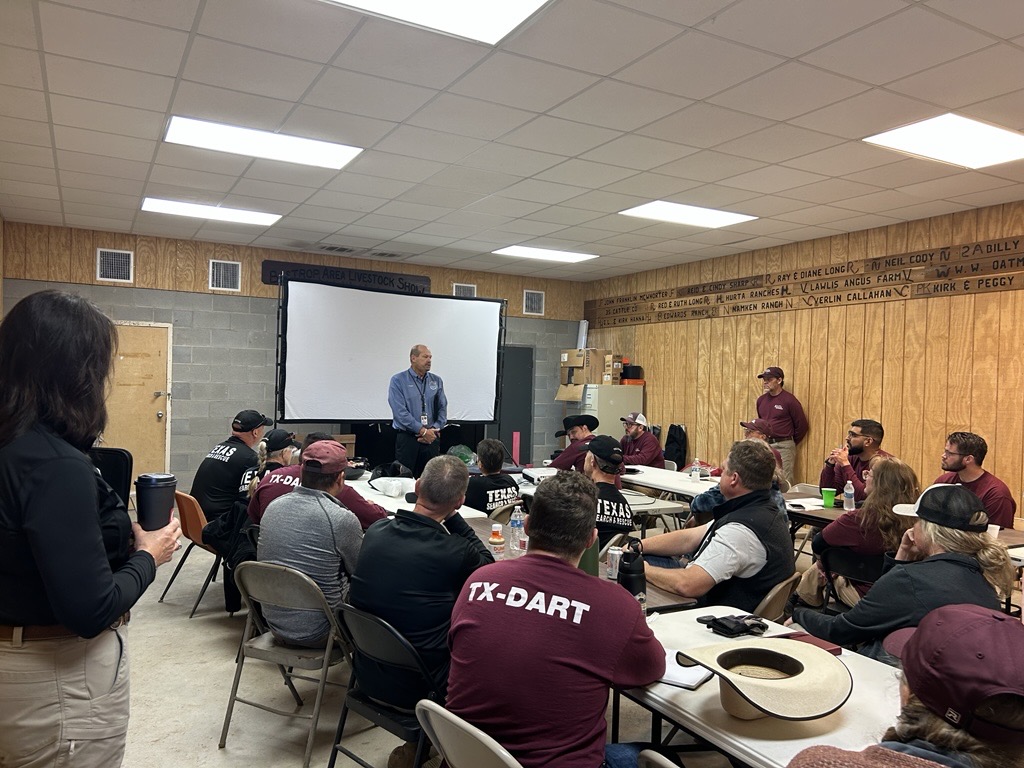
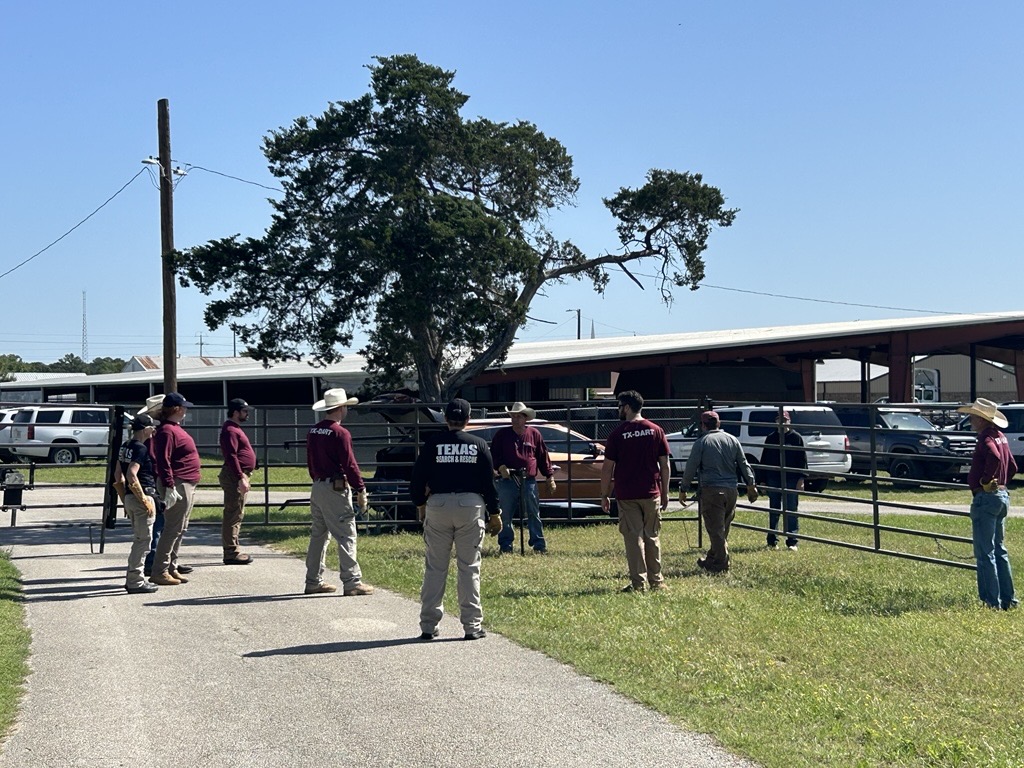
In a continued effort to enhance disaster preparedness and response capacity, the Texas A&M AgriLife Extension Service’s Disaster Assessment and Recovery (DAR) unit recently conducted an Operational Readiness Exercise (ORE) in Texas. This multi-agency training brought together State DAR Specialists, DAR leadership, the Texas A&M Veterinary Emergency Team, and the non-profit Texas Search and Rescue (TEXSAR) to strengthen response strategies and field operations.
The exercise emphasized hands-on learning and practical deployment experience, focusing on DAR’s most frequently utilized equipment in disaster response. Participants engaged in training sessions on establishing a Base of Operations (BOO), staging management, and operation of key equipment such as the OK Corral, command trailers, and animal shelter trailers.
A core focus of the exercise was managing animal-related emergencies, the main component of DAR’s efforts in disaster response. Educational sessions covered Animal Issues Plans and the management of Animal Supply Points, including county Animal Issues committee formation, sheltering strategies, and the use of essential forms including intake templates, administrative documents, and operational checklists. Participants also received practical guidance on preparing for deployments, including how to pack go-bags for rapid deployments.
Safety training and shelter operations were key components, with the VET Team representatives teaching small animal shelter setup, safe handling techniques, understanding disease transmission, and optimizing kennel layout and spacing for efficient and humane care.
Beyond technical training, the event served as a platform for specialists to share program successes, exchange ideas, and strengthen collaborative relationships.
Looking ahead, DAR staff will continue working closely with County Extension Agents across Texas to disseminate information on available resources and provide support for developing and refining local Animal Response Plans. These efforts are vital to ensuring communities are equipped to safeguard both human and animal lives during disasters.
By ChaNae` Bradley, Senior Communications Specialist, MPA,Fort Valley State University
Extension educators in Arkansas, North Carolina, Tennessee and Texas will soon have access to additional information and tools to help mitigate the challenges of natural and manmade disasters.
Dr. Michelle Eley, community and economic development specialist for North Carolina A&T State University, is spearheading this effort by serving as the principal investigator for a Southern Sustainable Agriculture Research and Education (SARE) Professional Development Program (PDP) grant.
The grant project is called, “Developing a Training Program on Surviving Disasters through Risk Management Preparation and Best Management Practices for Agricultural Producers.” Through this one-year grant, Eley along with members of the 1890 EDEN Advisory Group (AG), will conduct risk management programming with farmers in natural and man-made hazards and other incidents caused by extreme weather events. The grant is funded around $112,500.
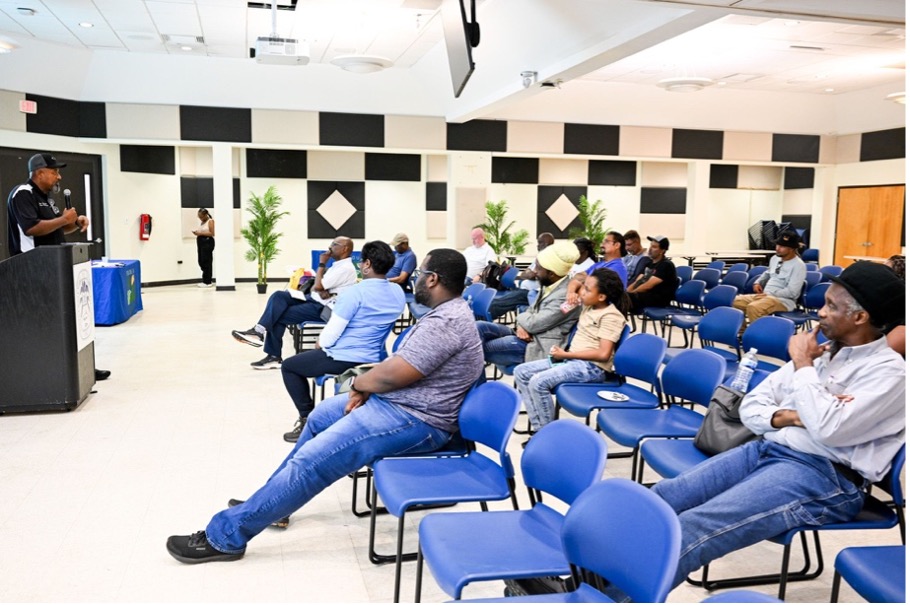
Participants of the Surviving Disasters through Risk Management Preparation and Best Practices training pose for a photo during their two-day training in Cordova, Tennessee, April 30 -May 1.
“We have seen the impact and devastation when farmers are not prepared. When we look at agriculture in general, the data shows that small-scale farms are likely to not have a plan to mitigate various risks, particularly in response to a disaster event. Sometimes they have less access to respond and recover from events when they do occur,” Eley said.
The goal of this project is to equip Extension educators and agricultural professionals with the skills and tools they need to conduct risk management programming with farmers. Agents will assist small and minority farmers in the development of personal and/or business plans to reduce risks and increase financial stability of their operations.
Eley said the project was developed because Extension has seen success when educators were able to closely work with farmers and create practical risk management plans. Eley describes risk management as a process of identifying, assessing and appropriately addressing the threats or uncertainties that impact a farm business.
Dr. Michelle Eley, community and economic development specialist, North Carolina A&T State University.
North Carolina A&T State University.
“We wrote the proposal as a professional development opportunity because we wanted to build the capacity of 1890 agricultural Extension educators to implement a disaster risk management education program for their clientele and support them as they make decisions to mitigate the risks on their farm operation. Implementing this program has also allowed us to partner with agricultural professionals who share some mission in offering technical support and resources that support the success of small and mid-size farmers,” Eley said.
The community and economic development specialist added that the 1890 EDEN AG wants educators to train farmers to develop plans for their farms, set goals and create business plans to execute on their farms. They aim to make it personalized and help farmers identify risks and connect them to available resources.
Arkansas, North Carolina, Tennessee and Texas are participating in the project with plans to expand it across their respective states.
“The project coordinators from the participating states have very robust small farm programs, and they have a good track record in securing resources and grant dollars to support the programming they are engaged with their agents, small farm clientele, and other stakeholder groups,” Eley said.
In addition, Eley said these states have many producers and direct contact with the clientele they want to reach.
The group conducted a train-the- trainer workshop with 16 field faculty from April 30-May 1, at the Agricenter Showplace Arena in Cordova, Tennessee. They received an instructional program on risk management that will provide them with tools to deliver this program to their respective farmers. The training program’s content focused on five risk management principles, the process of conducting a vulnerability assessment on the farm and the fundamentals of farm business planning.
Participants of the train-the-trainer workshop receive instruction at the Agricenter Showplace Arena in Cordova, Tennessee.
Eley said she hopes the train-the-trainer workshop provided Extension educators with the tools they need to support small farmers in the development of a risk-response strategy.
“If we help farmers stay informed and adapt to the constant changes they are facing as farm businesses, I’d consider this a success. We want farmers to thrive, and we want small-scale farming to continue,” Eley said.
https://extensiondisaster.net/wp-content/uploads/2026/03/eden-logo-for-web-2.png00ellenkrugel@extension.orghttps://extensiondisaster.net/wp-content/uploads/2026/03/eden-logo-for-web-2.pngellenkrugel@extension.org2025-05-13 00:56:332025-05-13 00:56:331890-EDEN Advisory Group aims to help small farmers face disasters